How Your Poké Bowl Gets Built at Our Ottawa Poké Bar
Ever stood at a build-your-own bar and felt the mild panic of holding up the line? Same. A poké bowl counter can look like a lot, but here is the secret: it is just four friendly steps. This is your easy, aloha-style walkthrough of how a bowl gets built at Paradise Poké, a family-run spot with two Ottawa locations: Westboro/Hintonburg at 118 Holland Ave and Downtown Centretown at 134 Bank Street. If you have ever typed "poke bowl near me" and hoped for a gentle intro, this one is for you. We will follow a single bowl from start to finish, covering Step 1: Pick Your Base (plus what sushi rice for poké bowls actually is), Step 2: Choose Your Protein, Step 3: Load Up on Toppings, and Step 4: Finish With Sauce. We will also share pairing tips, three balanced example builds to steal, and how to order at the counter without freezing up. By the end, you will know the sequence, the choices at each station, and how to get exactly what you want.
Your First Poké Bowl, Minus the Panic
Build-your-own poké bars can look like chaos. It's actually a straight line: base, protein, toppings, sauce. Four stops, one decision at each. Nobody expects you to know this in advance, so breathe.
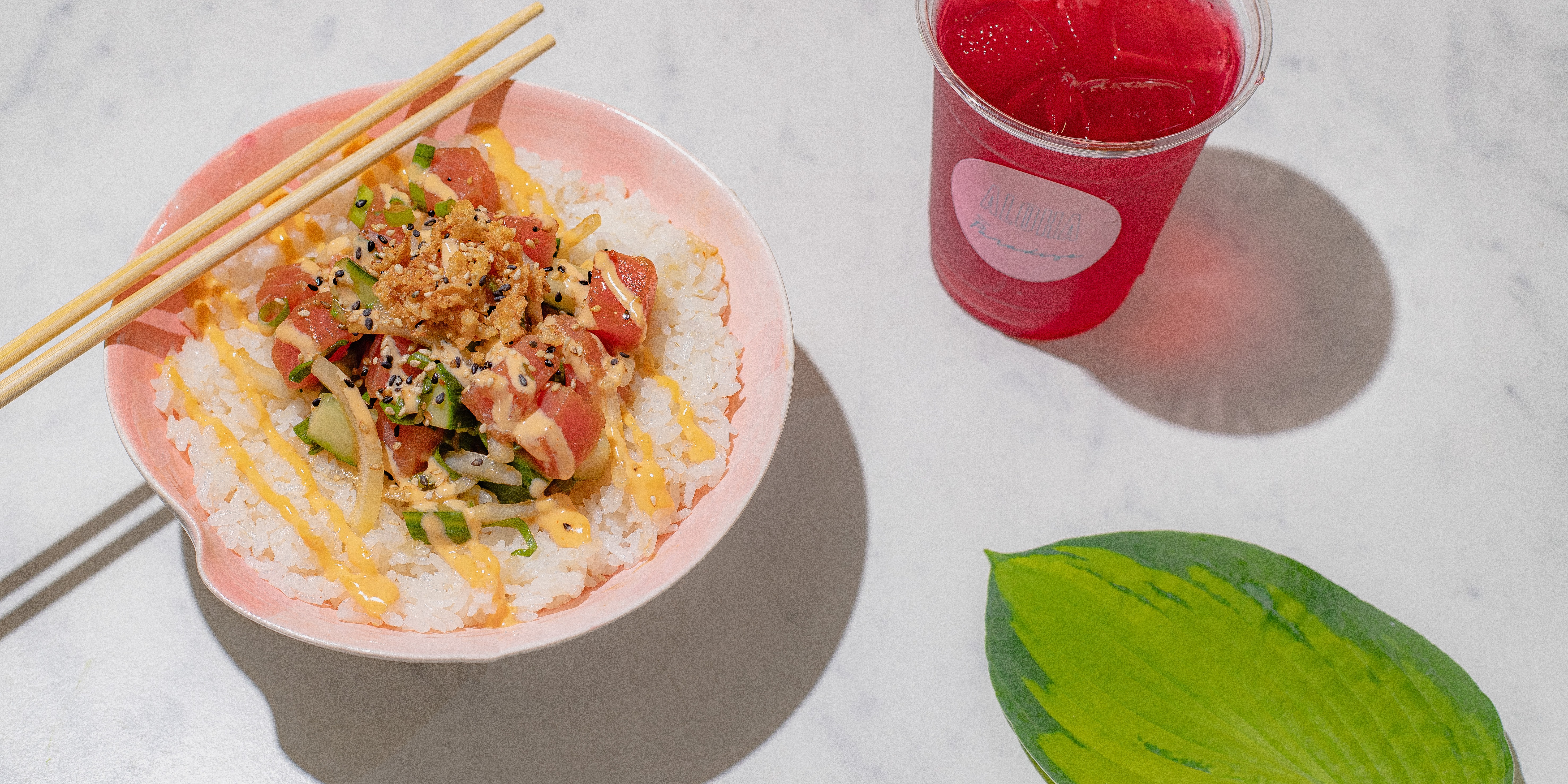
A poké bowl is a Hawaiian-style bowl built on seasoned rice or greens, topped with protein, fresh vegetables and fruit, and finished with a sauce. The exact lineup depends on what's on the counter that day.
If you typed poke bowl near me into your phone in Ottawa, you're in the right place. Paradise Poké is family run, with Westboro/Hintonburg at 118 Holland Ave and Downtown Centretown at 134 Bank Street. First-timer friction is real: unfamiliar words, a long counter, a line behind you. But the sequence never changes, so you can't get it wrong. For extra confidence, see Pro Tips for Getting the Most Out of Your Paradise Poké Bowl.
We'll follow one bowl end to end, then hand over three example builds. Those are illustrations of how stations combine, not official menu items.
Step 1: Pick Your Base
First stop is the easiest: you're just choosing what sits under everything else. That call sets the bowl's texture and how heavy it eats. At most poké bars you'll see seasoned short-grain sushi rice, brown rice, mixed greens, or a half-and-half split. The split is the underrated move: you keep the rice texture but lighten the bowl.
Rice eats heartier, reads more traditional, and soaks up a wet poke bowl sauce without going soupy. Greens feel lighter, suit lower-carb eating, and work for keto or paleo-style leans. If you're managing nut free, dairy free, gluten free, vegan, vegetarian, high protein, keto, celiac friendly, plant based, lean protein, grilled chicken, organic tofu, organic beets, or local produce choices, say so right here, not at the end. Paradise Poké lists those options, and staff can steer you from the first scoop. A quick look at the Paradise Poké FAQ can settle common questions before you visit.
Rice usually comes warm or at room temperature, not fridge cold, because chilled rice firms up and clumps. Can't decide? Ask for a split base and taste both in one sitting. Next, protein.
What Sushi Rice for Poké Bowls Actually Is
The first station's rice is not regular rice. Sushi rice is Japanese-style short-grain rice, cooked then seasoned with rice vinegar, sugar and salt, giving it a faint tang and slightly sticky, clumping texture.
That stickiness is the point: it holds together when you scoop, so a fork or chopsticks work, and its mild acidity cuts through a salty, rich poke bowl sauce instead of disappearing under it. It is a classic; for the full story on what goes into an authentic Hawaiian poké bowl, we have you covered.
Naming confusion: it is called sushi rice because of how it is prepared, not because your bowl contains a roll. Plenty expect a trick when searching sushi rice for poke bowl. Honest answer: it is just seasoned rice.
Plain long-grain, basmati or jasmine rice will not work. Those grains stay separate and loose, so the bowl eats like a stir-fry over rice rather than a poké bowl. Leftover cold rice is firmer and drier.
Note: this is the general principle behind the base, not a claim about a specific rice blend or supplier. Ask staff what's in the rice; they will tell you.
Next: the protein station, where your bowl gets filled.
Step 2: Choose Your Protein
Once your base is settled, the next stop decides everything else. Protein is the money call: it usually drives what the bowl costs and how filling and protein-dense it lands. This is where a lighter lunch becomes a full meal. You will typically see cubes of raw tuna or salmon, cooked shrimp, grilled chicken, and tofu. The sustainable seafood claim is a big draw here. On the diet side, grilled chicken reads as lean protein, organic tofu covers plant based and vegan, and both build a high protein bowl. Splitting two proteins is common at many bars, but ask at the counter rather than assuming. A half and half is a smart way to try something unfamiliar without committing your whole bowl. A quick safety note: raw fish hinges on cold chain and turnover, so ordering it where volume is high feels safer. If you are pregnant, immunocompromised, or simply not a raw fish person, cooked shrimp, chicken and tofu are not a downgrade. They are a different build. Paradise Poké offers something for everyone, whatever you pick.
Step 3: Load Up on Toppings
Toppings are where the bowl gets fun, and where a first-timer can freeze. They decide whether you get crunch, colour and contrast or a pile of soft cubes. Scan in four mental buckets: crunchy (cucumber, edamame, crispy onions), creamy (avocado), tangy or sweet (mango, pineapple, pickled veg), and fresh (seaweed, scallions, sprouts, herbs). The rule that scales to any counter: one crunchy, one creamy, one tangy, one fresh. Four toppings, balanced bowl. Taking everything is the classic first-timer move, and it turns a bright bowl into a muddle. If you skipped rice for greens, let toppings do the heavy lifting with organic beets, local produce and plenty of veg. It still eats like a meal, not a side salad. Allergy note: toppings and sauces can carry nuts, sesame or gluten, which are among Canada's priority food allergens. Paradise Poké states it offers nut free, dairy free, gluten free, celiac friendly and vegan options, so speak up now while staff have hands free. For a deeper look at building a great bowl, see what actually makes a great poké bowl. Next comes sauce.
Step 4: Finish With Sauce
Your toppings are stacked, so there's one move left: sauce. This is the last call and the one that decides the flavour direction of the whole bowl. Everything before was ingredients. This is where it gets a personality.
You'll spot a few families at the counter: soy and umami classics, creamy mild mayo styles, spicy chili or sriracha builds, sesame-forward dressings, and lighter citrus or sweet-tangy finishes. You don't need brand names, just the direction you want.
Sauce can be poured over at the end or tossed through the whole bowl. On a first visit, ask for it on the side. It's the best anxiety-killer at the counter because you control the amount instead of finding out too late.
One honest heads-up: traditional soy sauce often contains wheat, so a gluten free or celiac build needs a tamari-style alternative, and creamy sauces can carry dairy or egg. Paradise Poké states dairy free, gluten free and nut free options are available, but ask before you commit. Also, too much sauce on greens makes them wilt, which is another reason side sauce wins.
Want a shortcut? Our Signature Poke Bowls give you a feel for how it all comes together.
Pairing Tips: Matching Sauce to Your Bowl
Now that your sauce is on the side, here's how to match it to what's underneath. Lighter citrus and sesame sauces sit well with fish, a soy or teriyaki-style sauce flatters grilled chicken, and spicy-sweet leans into tofu beautifully.
Your base matters too. A rice base can carry a punchier, saltier poke bowl sauce without falling apart, while a greens base does better with something lighter so the leaves stay crisp to the last bite.
Try the taste-then-adjust approach: one spoon of sauce per few bites, adding more as you go. It turns a one-shot decision into a conversation with your own bowl. And if you're torn, just ask the staff. The people behind the counter build these all day and know which combinations regulars keep coming back for.
Three Example Builds to Steal on Your First Visit
Think of these as templates, not official menu items. They show how the four stations combine into a balanced bowl, so swap anything freely at the counter.
Example build one, high protein: sushi rice base, salmon plus a second protein or grilled chicken for a double hit, edamame, cucumber and avocado on top, sesame or soy-style sauce. Order this if you are training, working out after lunch, or just want to stay full past 3pm.
Example build two, plant based and vegan: brown rice or a greens base, organic tofu, organic beets, edamame, mango and pickled vegetables, finished with a citrus or sesame sauce and no dairy anywhere. It stacks up with the vegan, vegetarian, plant based and dairy free options the restaurant states it offers.
Example build three, lean and light: half greens and half rice, grilled chicken or cooked shrimp, cucumber, sprouts, light on the creamy toppings, sauce on the side. This is the build for a lighter lunch, a keto-leaning day, or anyone managing gluten or celiac concerns who wants to control what goes in.
Copy one exactly for your first bowl so you have a baseline, then change one thing each visit. The build order never changes, so the four stations stay the same no matter how adventurous you get.
How to Order at the Counter Without Freezing Up
Copy one of those builds and you're already ahead of half the line. A few counter habits make the rest easy.
Scan before you queue. The stations run in sequence, so ten seconds tells you where base ends and protein begins. You walk in oriented.
Lock your first two calls before you reach the front. Base and protein drive everything downstream, so once those are set, toppings and sauce become quick, low-stakes picks.
Say your restriction first, not last. Celiac, dairy free, nut free or vegan? Mention it at the base station so staff can steer you the whole way down instead of rebuilding your bowl at the end.
Lean on three low-risk requests: sauce on the side, a half and half on anything you're torn between, and a straight recommendation when you can't decide. All three are normal. It's how regulars order.
Feeding a crowd? Paradise Poké caters events, gatherings and meetings from 12 to 300 people, so a build-your-own spread works for a team lunch or a party, not just a solo bowl.
And if you searched restaurant sushi poké or poke bowl near me in Ottawa, you're covered. Two Ottawa Locations Means a Great Poke Bowl Is Always Close: Westboro/Hintonburg at 118 Holland Ave and Downtown Centretown at 134 Bank Street.
Your Bowl, Your Way: Takeaways Before You Go
See? Four stops, four decisions, base, protein, toppings, sauce, and the same order every time. That's the whole magic trick, and you've now walked it end to end.
Three quick actions before you go. First, go sushi rice for the classic experience, or greens or a split base if lighter is more your thing. Second, pick your protein by goal: tofu for plant based, grilled chicken for lean, salmon for the traditional build. Third, top with one crunchy, one creamy, one tangy and one fresh, then ask for sauce on the side.
Treat those three example builds as a starting template, not a rule. Change one ingredient per visit and you'll land on your own house bowl faster than you'd think.
Come say hi at Paradise Poké, 118 Holland Ave in Westboro/Hintonburg or 134 Bank Street in Downtown Centretown. Aloha!
Conclusion
There you have it: four simple steps, base, protein, toppings, sauce, and you're set for your next poké adventure. The key is keeping it easy. Start with the classic sushi rice, choose a protein that fits your goal, and layer in crunch, cream, tang, and freshness with your toppings. Treat the example builds as a launchpad, not a rulebook. Swap one ingredient each visit and you'll lock in your perfect house bowl in no time.
And for your next step? Come put it all into practice. Swing by Paradise Poké at 118 Holland Ave in Westboro/Hintonburg or 134 Bank Street in Downtown Centretown. Whether it's a solo lunch or a catering spread, your bowl is waiting. Aloha!


Comments