How to Build a Celiac-Safe Poké Bowl in Ottawa
Poké bowls look like the ultimate gluten-free dream, right? Fresh fish, rice, veggies... what could possibly go wrong? Well, quite a bit, actually. Between soy-drenched marinades, sneaky imitation crab, and crispy toppings that might be battered, there are gluten landmines hiding in some pretty unexpected places.
But here's the good news: poké can absolutely be one of the safest, easiest meals out there for celiac and gluten-sensitive diners. You just need to know what to look for and which questions to ask. That's where this guide comes in.
We're going to walk you through everything you need to build a celiac-safe poké bowl in Ottawa with confidence. You'll learn why poké is both risky and totally doable, what the 20 ppm rule actually means for your order, and which sauces and toppings are the usual suspects. We'll also cover how to start with a safe base, pick your protein without the guesswork, and hand you a default build you can order every single time. Plus, we'll give you a quick 20-second script for the counter and share where to put all this into practice around Ottawa. Let's build smart and eat well, aloha style.
Why Poké Is a Gluten Landmine and Also One of the Easiest Safe Meals
Good news first: poké is a build-your-own situation, so you can see almost every ingredient before it lands in your bowl. No mysterious assembled dish here. Fresh fish is fish, rice is rice, and most vegetables are just vegetables. Nothing about poké actually requires wheat to work.
The catch? Gluten sneaks in through the parts you don't think about: sauces, marinades, and the crunchy stuff on top. That's where celiac diners get tripped up almost every time.
By the end of this guide, you'll know the four component categories to check, what to swap, and a default order you can literally read off your phone at the counter. For a deeper look at customizing a bowl, see a fully custom poké bowl and our healthy eating guide.
One plain note before we dive in: this is a guide, not a guarantee. Always confirm with the person building your bowl.
The 20 ppm Rule: What It Covers and What It Does Not
Before we build the bowl, here's the fine print. Under Section B.24.018 of Canada's Food and Drug Regulations, a food can't be labelled, sold, or advertised as gluten free if it contains any gluten protein or modified gluten protein (McMaster Celiac Clinic). Health Canada doesn't set a numeric threshold in the regs, but it considers levels below 20 ppm generally not a health risk for people with celiac disease, matching Codex Stan 118-1979. There's a cross-contamination carve-out too: gluten-free foods made under good manufacturing practices, with gluten from cross-contamination not exceeding 20 ppm, meet the intent of B.24.018 (Health Canada). The CFIA enforces gluten-free claims and inspects manufacturers and distributors; products under 20 ppm from cross-contamination won't be recalled or forced to drop the claim.
These rules govern packaged food labelling and manufacturing, not restaurant preparation. A gluten-free label on a bottle of tamari tells you something real. A gluten-free claim at a poké counter depends entirely on staff practice, shared utensils, and shared surfaces. Do not treat them as the same thing.
The Danger Zone: Sauces, Marinades and Dressings
So the label rules won't save you at the counter. Sauces are where gluten hides out. Standard soy sauce is usually brewed with wheat, so anything built on it, like teriyaki, house sauces, ponzu or glaze-style dressings, is suspect unless the kitchen confirms a wheat-free alternative. Marinades are the invisible version: ask whether your protein is marinated, because a soy-based soak means it's no longer a plain protein. For creamy or spicy sauces, don't assume; ask what the base is. Here's the beginner rule: if a sauce is brown, glossy or soy-adjacent, treat it as guilty until staff can tell you what's in it. Oil, citrus or plain vinegar based sauces are usually the safer ask, but confirm. Sauces sorted. The crunch on top is the next trap.
Crunchy Toppings and the Imitation Crab Problem
Sauces sorted, now the toppings. Crunch is trap number two: tempura flakes, panko, crispy fried onions, and many crunchy salad toppers are wheat flour in disguise. Then there's imitation crab. Surimi-style crab salad is a poké-counter staple and often bound with wheat starch, making it one of the sneakiest gluten carriers on the line. Shared fryers are their own risk: even a naturally gluten-free topping can pick up gluten if it's fried alongside battered food, a cross-contamination issue rather than an ingredient one. Newer research is quantifying that shared-fryer risk. Easy crunch swaps: toasted sesame seeds, crushed seaweed, cucumber, edamame, avocado, pickled veg, and radish. Before publishing, verify all tempura and crunchy-topping claims against Canadian celiac-society or Health Canada material, since the research brief doesn't cover them.
Start With a Safe Base
Crunchy traps handled. Now for the easy part: the base. Sushi-style rice, mixed greens, and plain grain bases are the least likely spot to find gluten at a poké counter. If you're building something close to a traditional Hawaiian poké bowl, you're probably starting with rice anyway, and that's a good thing.
One caveat: some counters offer noodle bases or crunchy chow mein style bases. Skip those outright.
Rice vinegar, which seasons most sushi rice, isn't a wheat product. If the kitchen uses a pre-mixed seasoned rice mix, confirm it with staff.
Your decision tree is short. Rice or greens? Say yes. A noodle, a crisp, or a wrap? Ask what it's made from before you commit.
That's it. Mixed greens are naturally gluten free, so if you're after what makes a great poké bowl without the guesswork, the base is where you get to relax. Easy win. Next up: protein and toppings.
Pick Your Protein and Toppings Without the Guesswork
Base sorted? Nice. Now the line gets fun: protein, then toppings, then sauce, in that order.
Plain, unmarinated picks are your safest bet: raw salmon, raw tuna, shrimp, and grilled chicken that hasn't been sitting in a soy marinade. Plant-based pals are friendly too: organic tofu, organic beets, and fresh veg are common gluten-free picks, though tofu can arrive pre-marinated, so still ask.
Toppings that are almost always a yes: avocado, cucumber, edamame, seaweed, mango, pineapple, radish, green onion, and sesame seeds. Keep allergens in mind if that's you. The question marks are anything breaded, crispy, creamy, or "house made" with no stated base.
Walking the line protein first, toppings second, sauce last means you only have to ask about the last one or two items instead of the whole bowl. Easy peasy.
Your Default Celiac Build: Order This, Every Time
Previous section walked you through the line. Now here's the answer you can screenshot.
Your default celiac build:
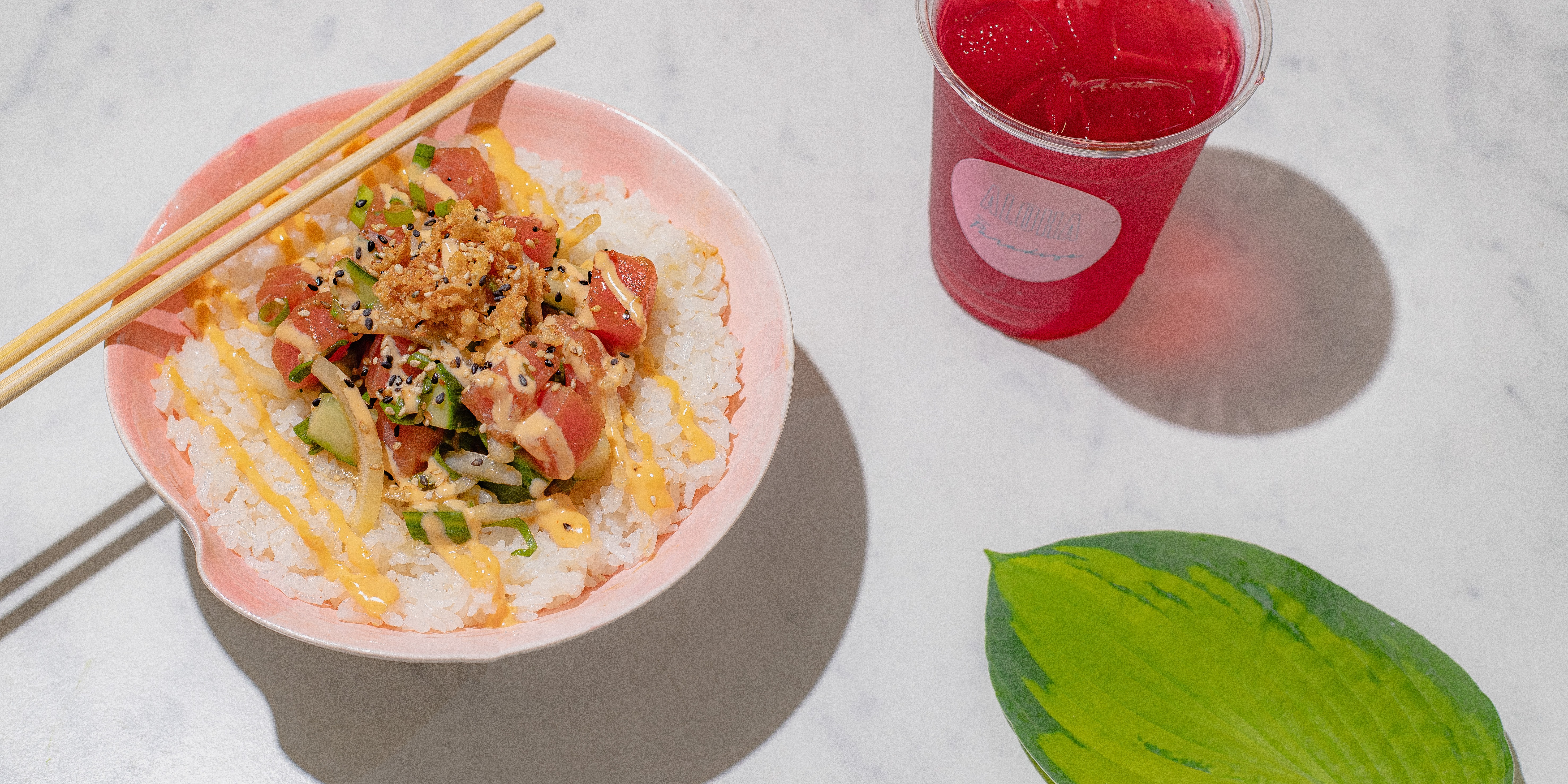
Rice base. Plain rice, nothing fancy. It's the least processed thing on the line.
Raw salmon or grilled chicken. Both unmarinated, so no soy sauce hiding in the protein.
Avocado, cucumber, edamame, green onion, sesame seeds. All naturally gluten free and all bring texture, so you won't miss the crunch.
No crunchy toppings. Skipping tempura and fried bits removes the biggest wheat risk in one move.
Simple citrus or sesame oil sauce. No soy base, no guessing.
Swaps, same sauce logic: tuna for salmon, tofu for plant-based, mango or pineapple for sweetness, seaweed for a salty bite.
This is a starting template, not a menu. Check it against Paradise Poké's FAQ and their current ingredients before you order.
Why bother with a default? It kills decision fatigue. You walk in knowing exactly what to say instead of negotiating while the line grows behind you.
What to Say at the Counter: A 20 Second Script
Your default build gives you the order. The script is what protects it. Say this, phone in hand if you need: "Hi, I have celiac disease, so I need to avoid wheat and cross-contamination. Which sauces contain soy sauce? Could you use clean gloves and a fresh scoop for my bowl?" That glove-and-scoop ask is not fussy. Shared scoops sitting in different toppings are the main cross-contamination vector at a build-your-own counter. Mention cross-contamination directly, because staff hear "gluten free" all day and may read it as a preference. Ask about sauce specifically too: it is the item most likely to carry gluten and the easiest to swap. Want to go deeper? McMaster Celiac Clinic lists "Dining Out with Celiac Disease" and "Preventing Cross-Contamination" as separate resources worth a read.
Where to Put This Into Practice in Ottawa
You've got your script. Now you just need a counter to try it at. In Ottawa, Paradise Poké is a handy spot to put all this into practice, whether you're building your first safe bowl or you've been at it a while.
They've got two locations: Westboro Hintonburg at 118 Holland Ave, and Downtown Centretown at 134 Bank Street.
Paradise Poké says it offers gluten-free, celiac, nut-free, dairy-free, vegan, vegetarian, high-protein, keto, and plant-based options. That's their statement, not a certification, so still ask your sauce and glove questions. They also say they serve sustainable seafood only and use biodegradable and recyclable packaging, a nice bonus for a health-conscious lunch.
Organizing a work lunch? They offer Order Paradise Poke Catering in Ottawa for events and meetings from 12 to 300 people, which makes the group-meal thing a lot less stressful for a celiac diner.
One Honest Safety Note Before You Go
So before you head out the door, one honest note. A shared poké counter can't promise a zero gluten environment, no matter how careful the staff are. Surfaces, scoops, and hands all touch multiple ingredients.
And heads up: none of this makes a restaurant kitchen "certified gluten free." The 20 ppm and B.24.018 rules you might have read about apply to packaged food labelling, not restaurant prep. They're not the same thing.
Your comfort level is yours to judge. A gluten-sensitive diner and a celiac diner might make different calls at the same counter, and both are completely valid.
One last thing: confirm with staff every visit. Sauces change, suppliers change, and so do the people building your bowl. If you're organizing a group order, our quick poké catering planning checklist is worth a read too. Now go build smart and eat well.
The Aloha Takeaway: Build Smart, Eat Well
Good news: once you know the drill, this whole thing gets easy. Here's the aloha version.
Your order, every time: base first, protein second, toppings third, sauce last, and ask about that sauce every single time.
The three things that actually carry gluten: wheat-based soy sauce and the marinades built on it, breaded or fried crunchy toppings, and imitation crab.
Your fallback build: rice, unmarinated fish or tofu, fresh veg, a sesame or citrus sauce, and no crunch. Simple, repeatable, and safe.
At the counter: use the script, ask about gloves and scoops, and confirm with staff on each visit. Sauces change, staff change, suppliers change. Don't assume last time's answer still holds.
Honestly, poké is one of the friendlier meals out there for a gluten-free diner once you know the four spots to check. It's also why a poké bowl is one of the smartest meals you can order.
Now go enjoy the bowl. Aloha!
Conclusion
So there you have it: poké doesn't have to be a gluten gamble. Remember the big four: start with a safe base, choose unmarinated proteins, load up on fresh toppings, and always, always ask about that sauce. The three gluten landmines to watch for are wheat-based soy sauce and marinades, breaded crunchy toppings, and imitation crab. Keep your fallback build in your back pocket: rice, plain fish or tofu, fresh veg, and a simple sesame or citrus sauce with no crunch. And don't forget the 20-second script at the counter.
Ready to put it into practice? Swing by Paradise Poké and build your bowl with confidence. Check out our catering planning checklist if you're ordering for a crowd. Now go enjoy that bowl, Ottawa. Aloha!


Comments